Cart
0
You might also like



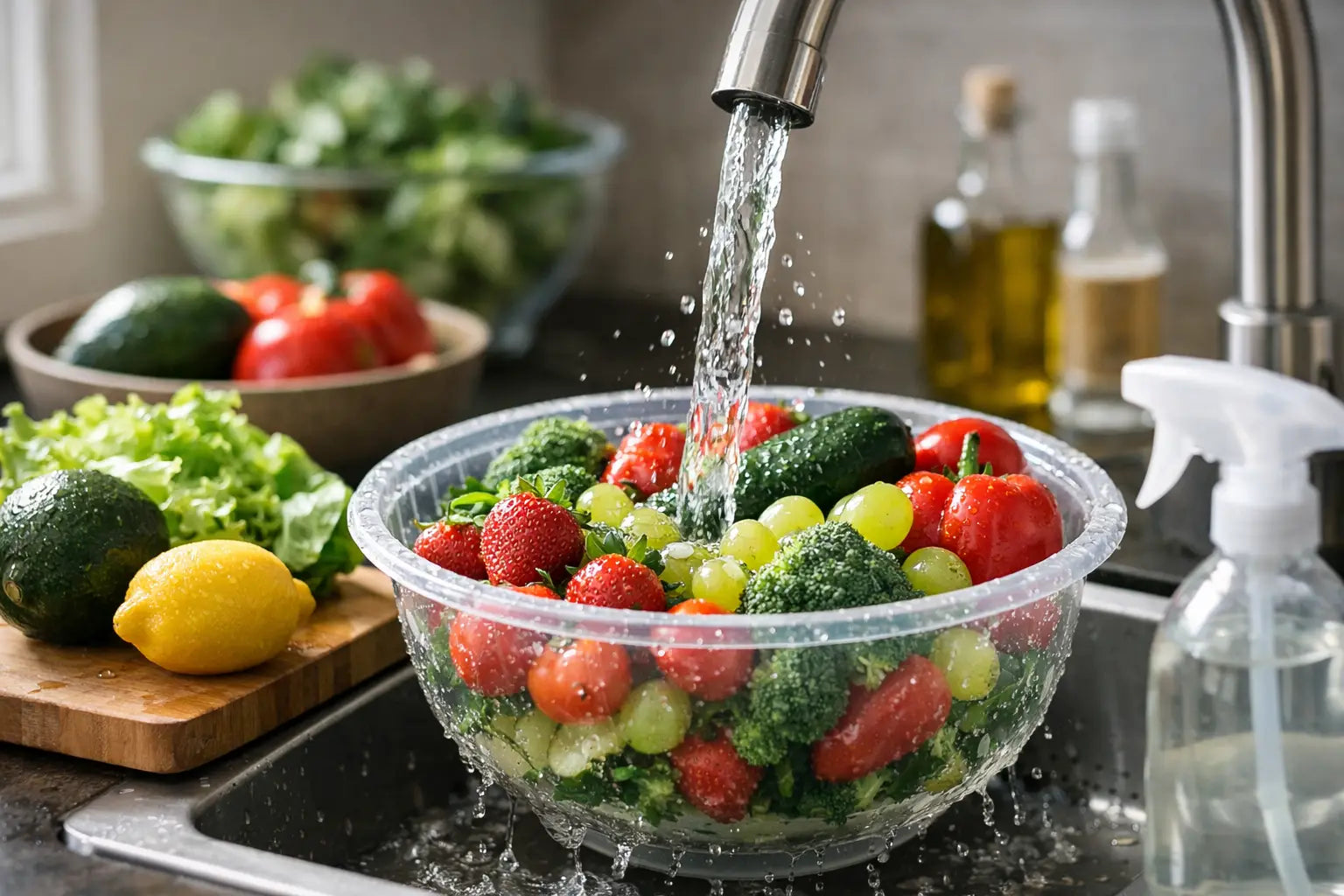
You rinse strawberries, apples, and salad greens under the tap and then wonder if that was actually enough. That is where the question becomes real: is produce wash worth it when you want better protection for your family from residues, dirt, and bacteria on everyday food?
The short answer is yes, sometimes. But not for every product, not for every expectation, and not in the same way depending on the type of solution you buy. Between standard sprays, soaking baths, and dedicated food-cleaning devices, there is a real gap in effectiveness, convenience, and long-term value.
If your only goal is to remove visible dirt from vegetables, a careful rinse under cold water is already useful. It removes some surface impurities and improves basic hygiene. For many households, this is the minimum step and it is not without value.
But if you want more than a visual rinse, the question shifts. Shoppers who buy a produce wash often want to reduce exposure to pesticide residues, improve cleaning of hard-to-reach areas, or get a more reassuring sense of cleanliness. At that level, not all products deliver equally.
A standard spray can help loosen some dirt, but its effectiveness depends on contact time, friction, the final rinse, and the nature of the residues. In short, it can do better than water alone in some cases, without guaranteeing a thorough or consistent result across the full surface of a fruit or vegetable.
That is why many households end up judging these products not on their marketing promise, but on a simpler question: does this give me real safety and peace of mind?
Water has an obvious advantage: it is simple, accessible, and immediate. Under a good stream, with some hand friction, it removes dust, dirt, and some surface-level contaminants. For firm produce like potatoes, cucumbers, or apples, this step is already better than a quick splash with no contact.
However, water alone has limits. It does not adhere well to waxy surfaces and does not always act effectively on more stubborn chemical residues. It also does not specifically target folded, porous, or textured areas like those found on strawberries, broccoli, cauliflower, or salad leaves.
This does not mean water is useless. It means it does part of the job — not necessarily all the work that careful consumers expect today.
Most produce washes sold as sprays or solutions are built around a simple idea: help remove what water does not. On paper, that sounds appealing. In practice, results can vary significantly from one product to another.
The first thing to look at is the ingredients. Some washes use components considered gentle and suitable for food use, while others rely mainly on a promise of freshness or naturalness without clearly explaining their level of action. For health-conscious households, that vagueness can be frustrating.
The second point is real-world use. Many sprays require several steps: spray, wait, scrub, rinse thoroughly. It is not complicated, but it adds time. On a busy week, that friction is often enough to make people abandon the routine.
The third point is recurring cost. A bottle may seem affordable, then become a repeated expense if you use it on large quantities of produce each week. The perceived value then depends on your purchase frequency, household size, and level of expectation.
Produce wash has the most value in households that consume a lot of fresh produce. If you regularly buy grapes, berries, leafy greens, fresh herbs, or foods that children eat raw, the benefit increases. The more delicate or hard-to-clean foods you handle, the more a serious cleaning system becomes relevant.
It is also more worth it if you approach health from a prevention mindset. Many parents and health-conscious shoppers do not wait for a visible risk to act. They want a simple habit that reduces daily uncertainty. In that logic, produce wash is not a gimmick. It becomes a routine tool.
Finally, it becomes more interesting when it fits easily into meal preparation. An effective but inconvenient product rarely gets used for long. Real value comes from a simple, fast solution that fits an active lifestyle.
Effectiveness is often discussed as if it only matters in a lab setting. But in real life, how something feels matters too. Serving clean fruit to your children, preparing a salad with more confidence, or washing food without wondering if the water was enough — that has real value.
It is not about giving in to fear. It is about reducing a zone of uncertainty in something you already do every week. For many households, that peace of mind justifies the purchase on its own, as long as the chosen solution is serious and easy to use.
No produce wash turns food into a sterile or perfect product. It is important to stay realistic. A good cleaning can help reduce surface residues and impurities, but it does not replace a safe food supply chain, good kitchen habits, or proper food storage.
You should also avoid solutions that promise everything without nuance. If a product implies that a simple spray alone solves all questions of pesticides, bacteria, and contamination, it is worth stepping back. The best choices are usually those that announce clear, concrete, and credible benefits.
One more important point: the type of food matters. A thick-skinned vegetable does not pose the same challenges as a raspberry or a bunch of spinach. An effective method must be able to adapt to different foods without complicating preparation.
This is often where the question of value becomes more interesting. A device designed to clean fruits, vegetables, and sometimes other foods goes beyond a disposable spray. It better meets the needs of households that want a regular, fast, and more advanced solution than basic rinsing.
The main benefit is consistency. Instead of using a bottle inconsistently, you build a simpler routine. You clean your food in a few minutes, with fewer steps, and without constantly buying a liquid solution.
For people who want to protect their health without complicating their kitchen, this type of solution can offer a better balance between perceived effectiveness, ease of use, and cost over time. This is exactly what explains the growing interest in devices like those offered by KSD Market.
Ask yourself three simple questions. First, do you eat a lot of fresh fruits and vegetables each week? Second, are you concerned about residues, impurities, or food hygiene beyond a basic rinse? Third, do you need a solution simple enough to actually become a habit?
If you answer yes to all three, then a produce wash has a good chance of being worth it for you. Not necessarily in the form of a classic spray, but in the form of a more convincing and easier-to-maintain cleaning method.
If you buy little fresh produce, peel almost everything, or are not particularly sensitive to this issue, the benefit will be more limited. This is not a universal purchase. It is a relevant one for certain lifestyles.
Yes, if you expect more than a quick rinse and want a simple solution to better clean what you serve every day. No, if you are counting on a miracle product or choosing a method that is too inconvenient to use consistently.
The right approach is not to look for the strongest promise. It is to choose a method that matches your level of expectation, your pace, and your need for confidence at the table. When cleaning becomes simple, regular, and reassuring, it stops being a chore and becomes a genuine daily protection habit.

