Cart
0
You might also like



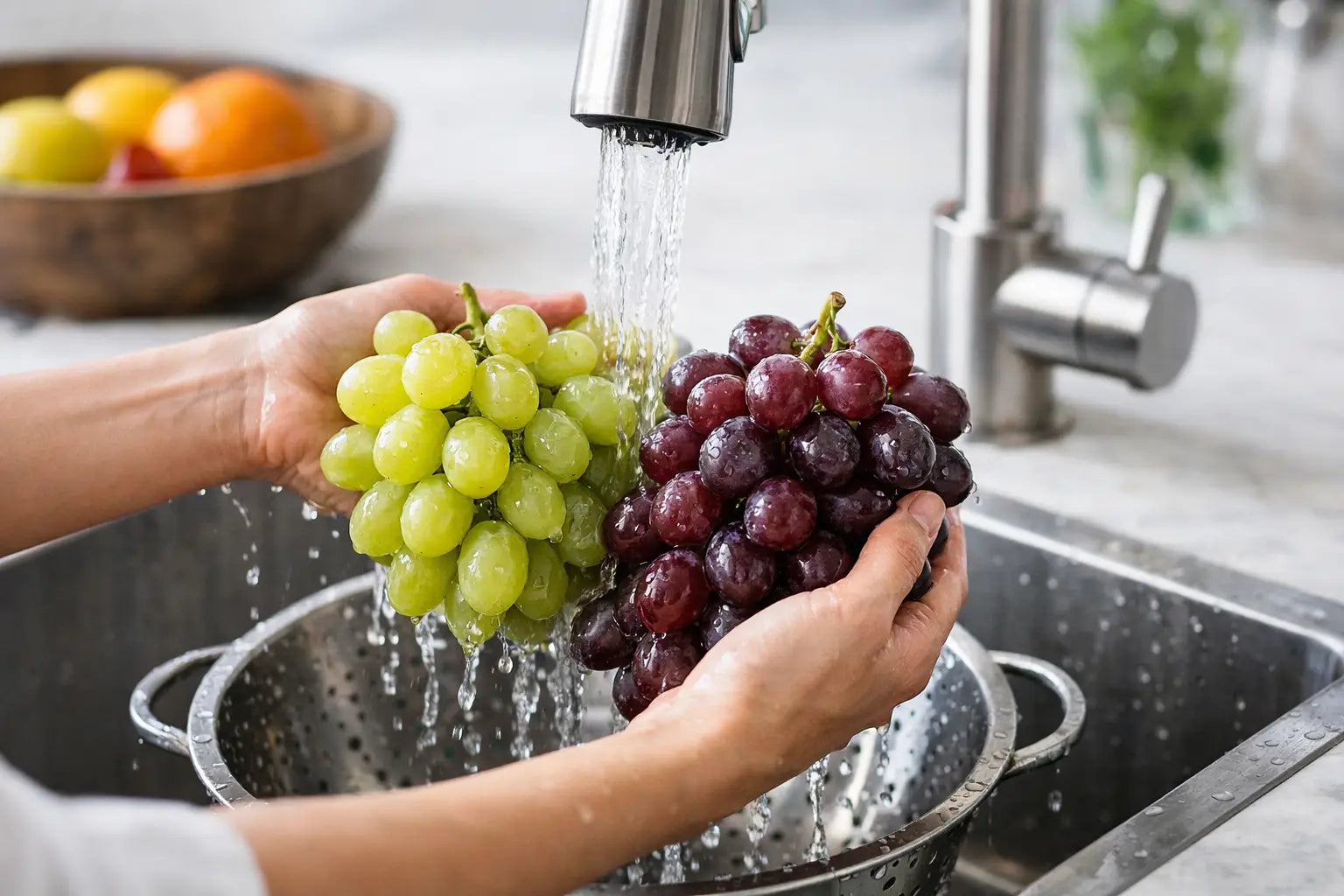
Grapes look clean. That's exactly the problem. Their smooth, shiny skin can still harbor pesticide residues, dust, transport deposits, and microbes picked up between harvest, packaging, and your kitchen. If you're wondering how to wash grapes thoroughly, the right answer is not to run them under water for two seconds and call it done.
Grapes are one of those fruits we almost always eat skin and all. That changes everything. When you peel a fruit, you remove a good portion of whatever is on the surface. With grapes, everything stays. And because the berries are packed tightly on the bunch, some areas barely get touched when you rinse too quickly.
There's also a practical reality to consider. Grapes travel, get handled, packaged, moved around store shelves, and then transported to your home. Even a visually flawless grape isn't necessarily truly clean. For a family looking to better protect their daily diet, a more thorough wash offers something simple but valuable: greater peace of mind.
The most reliable method starts before the water even turns on. The goal isn't just to wet the grapes — it's to loosen what's stuck to their surface.
Start by washing your hands and quickly cleaning the sink, colander, or bowl you'll be using. It may seem like a minor step, but washing fruit in a dirty container undoes part of the effort.
Next, remove any damaged, burst, or moldy grapes. A split berry can contaminate the rest faster than you'd expect, especially if the bunch has already spent a few days in the fridge.
Place the grapes in a colander or large bowl and rinse them under cold water. While rinsing, gently move the clusters around with your hands so the water reaches the hidden spots. A passive rinse isn't always enough, especially when the berries are tightly packed.
After that first pass, lightly rub the grapes with your fingers. No need to squeeze or scrub hard. The goal is enough friction to help lift surface impurities. On such a delicate fruit, too much pressure damages the skin and affects texture.
If you want to go beyond a simple rinse, a brief soak can help. A few minutes in clean water with gentle agitation will often dislodge residues tucked around the stems. Follow with a fresh rinse under running water.
For households looking for a more advanced approach, a food cleaning device designed for fruits and vegetables can offer a level of cleanliness that goes beyond a standard wash. This is especially relevant when you frequently consume thin-skinned produce or serve fruit to children without any additional preparation step.
It depends on your priority.
If your goal is to reach each grape more easily, removing some berries from the stem can help. Water flows better, and you can more readily spot areas where deposits are clinging. That said, removing all the grapes before washing can speed up deterioration if the skin weakens at the attachment point.
The most balanced approach is usually to keep the bunch intact during washing, then detach only what you're about to eat or serve right away. You get a thorough clean without unnecessarily reducing shelf life.
The most common mistake is still the quick rinse. A few seconds under the tap creates a feeling of cleanliness, but it's often not enough to remove what's actually sticking to the skin.
Another frequent misstep: washing grapes right after buying them, then putting them back in the fridge while still wet. Residual moisture speeds up deterioration. If you like to prep your fruit ahead of time, make sure to dry them thoroughly before storing.
Many people also reach for homemade mixtures without questioning whether they actually help. Vinegar, for example, is often mentioned. It can be useful against certain deposits and odors, but it sometimes alters the taste and isn't always the most practical solution for such a delicate fruit. Soap should be avoided altogether — fruits can absorb or retain residue from products not intended for consumption.
Finally, don't confuse a shiny appearance with actual cleanliness. Some grapes naturally develop a whitish film called bloom. This natural coating isn't a sign of dirt. The real concern is invisible residue that the eye simply can't detect.
Cold water is the baseline. It's the minimum, and it's always better than nothing. For most households, it's the simplest and most realistic routine.
Vinegar is a popular option, but its effectiveness depends on the type of residue, the soaking time, and the quality of the rinse afterward. It can be helpful in certain cases, but it's neither universal nor without drawbacks. Too strong a dose leaves a lingering taste; too light a rinse defeats the purpose.
Dedicated cleaning solutions or devices designed for food hygiene address a different expectation: removing more surface impurities without complicating your routine. For someone mindful of pesticides, food safety, and family health, this option can make real sense. The benefit isn't purely technical — it's also about consistency. When the method is simple, you use it more often.
The best time is right before eating or serving them.
Washing too early can shorten their shelf life, especially if the grapes stay damp. If you buy in bulk for the week, it's better to store them unwashed under good conditions, then prepare only the portion you need. This habit reduces waste and preserves better texture.
There is one scenario where pre-washing can be practical: busy households that want fruit ready to eat. In that case, the critical step is drying. Use a clean cloth or paper towel, handling the berries gently, and store them in a well-ventilated container.
Drying is often rushed, yet it plays an important role in food hygiene, texture, and shelf life.
After the final rinse, let the grapes drain for a moment. Then lay them on a clean cloth or paper towel and pat gently. Avoid rubbing hard — grape skin marks easily.
If you're serving them right away, a light dry is fine. If you're putting them back in the fridge, take an extra minute. Well-dried grapes generally keep better and are more enjoyable to snack on.
When grapes are meant for young children, elderly individuals, or anyone with a more sensitive immune system, a higher standard of care makes sense. In these situations, aim for more rigorous cleaning than usual: careful sorting, thorough rinsing, clean handling, and ideally a more advanced cleaning method if it fits your routine.
This isn't about being alarmist. It's about being consistent. If you're choosing fruit for its health benefits, it makes sense to give it a level of cleanliness that matches that intention.
This is also where a quick and simple solution earns its place in a family routine. If washing feels like too much effort, it often gets reduced to the bare minimum. A system designed to be fast while delivering better results can have genuine practical value at home.
Washing grapes properly isn't about finding a complicated method. It's about adopting a more careful, consistent gesture. Water, a little attention, good timing, and for some households, a more advanced cleaning solution — that's enough to make a real difference.
At the end of the day, washing grapes well isn't perfectionism. It's a small habit that better protects what you serve, without adding burden to your daily routine.

