Cart
0
You might also like



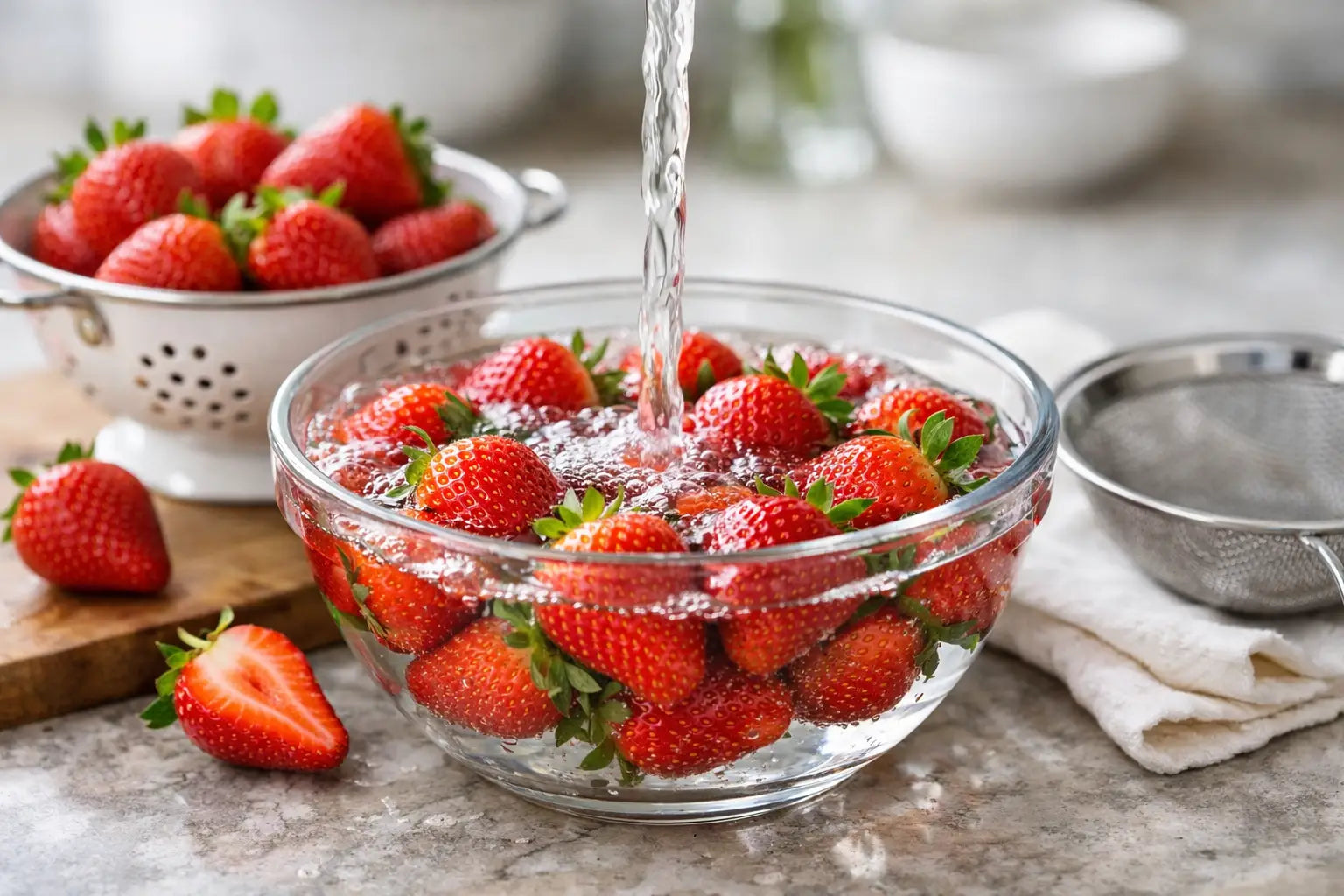
Strawberries don't wait. Rinse them too vigorously, and they soak up water, become soft, and lose that crisp taste expected from fresh fruit. Yet, cleaning strawberries without damaging them remains a real concern at home, especially when considering residues, fine soil, and handling before purchase.
The right approach is not to wash them for too long or to scrub them. It is crucial to limit mechanical aggression, avoid unnecessary soaking, and respect their natural fragility. When done properly, you maintain better cleanliness, a firmer texture, and more peace of mind when serving.
The strawberry is a delicate fruit, with thin skin and no real protective barrier. Its surface easily retains small particles, but it also bruises at the slightest impact. A jet of water that is too powerful, fruits piled up in a colander, or too long a bath are enough to accelerate its softening.
There's also another often-overlooked point: the longer a strawberry remains damp after washing, the more fragile it becomes. Residual water promotes a soft texture and reduces its firmness, especially if it has to wait in the refrigerator before being consumed. This is why the timing of cleaning matters almost as much as the method.
Some habits seem logical but yield poor results. Prolonged soaking in a large bowl of water is the classic example. Strawberries absorb some of this water, lose firmness, and their flavor becomes less distinct.
Another common mistake is to remove the stem before washing. As soon as the stem is removed, water can more easily penetrate the flesh. The fruit then becomes waterlogged and more vulnerable. It is better to wash strawberries whole, then hull them just before eating or preparing them.
Rubbing should also be monitored. Insistently mixing the fruits by hand, pressing them under water, or allowing them to knock against each other in a large colander can be enough to bruise them. On very ripe strawberries, the effect is immediate.
The best approach relies on little water, minimal handling, and careful drying. Start by sorting the strawberries. Remove those that are already crushed, split, or very ripe, as they don't tolerate cleaning well and can weaken the rest of the batch.
Then wash only the quantity you need in the short term. If you clean the entire punnet but only plan to consume a portion, you reduce their shelf life. For immediate consumption, run whole strawberries under a gentle stream of cool water for just a few seconds.
The touch should remain light. Gently roll the fruits between your fingers, without pressing. The goal is to remove visible dirt and surface impurities, not to mishandle them. Once rinsed, place them on a clean cloth or paper towel, then gently pat them dry. Do not leave them damp at the bottom of a container.
If you are preparing a dessert, wait until the last minute to cut them. A strawberry cut too early releases water, oxidizes faster, and loses its fresh appearance. Again, everything depends on gentleness and timing.
The answer depends on your priority. If you are mainly looking to remove dirt or small visible dust, a gentle rinse followed by good drying is often sufficient. If your concern also relates to residues and invisible impurities, water alone quickly shows its limitations.
Vinegar is often cited as a home remedy. It can help in some cases, but it has drawbacks. Too strong a dosage can alter the taste, and too long a bath further increases the risk of softening. Baking soda is also regularly recommended, but it requires thorough rinsing afterwards and is not always practical for daily use.
For many households, these methods end up complicating the routine. We want to clean better, but without multiplying the steps or leaving an off-taste on the fruits. This is where a dedicated food cleaning solution can make a real difference, especially when the household frequently consumes delicate fruits.

