Cart
0
You might also like



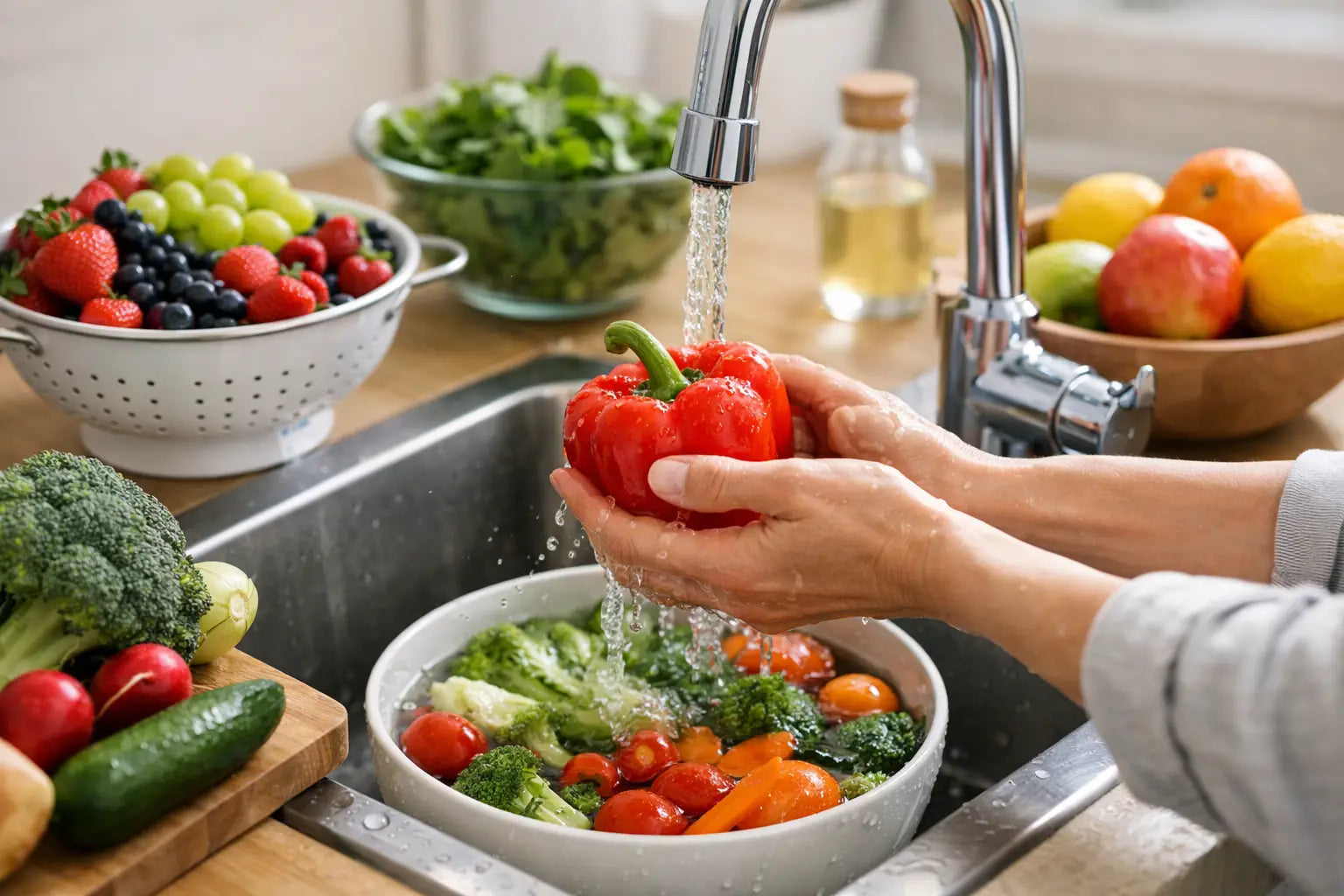
You come home from grocery shopping, rinse an apple under water, and then wonder if that's really enough. This is where the question of how to clean fruit and vegetable becomes very concrete, especially when you want to better protect your family from residues, bacteria, and invisible impurities.
Properly cleaning fruits and vegetables shouldn't turn meal preparation into a chore. The right method is one that you can easily apply every day, without wasting time or adding unnecessary steps.
The real issue isn't just visible dirt. A tomato may look clean but still carry traces of pesticides, wax, fine soil, or contaminants handled during harvesting, transport, and shelving. A simple rinse helps, but it has its limits.
That's why we need to distinguish between three levels of cleaning. First, removing dust and surface residues. Then, reducing the microbial load related to handling. Finally, seeking a more complete solution against stubborn residues, especially on thin-skinned products or those consumed raw.
Rinsing under running water remains a good basic reflex. It removes some dirt, a few microorganisms, and certain superficial deposits. For earthy vegetables like potatoes, carrots, or leeks, it's already an essential step.
But we must be realistic. Water alone is not always enough to dislodge certain chemical residues or to thoroughly clean irregular surfaces, such as those of strawberries, broccoli, or grapes. The more fragile, textured, or waxy the skin, the more delicate the cleaning becomes.
It's also a matter of contact. Many people rinse too quickly. A few seconds under the tap gives an impression of cleanliness, but not necessarily the level of protection sought when preparing a meal for children, pregnant women, or more sensitive loved ones.
The first mistake is to use soap or dishwashing liquid. This may seem logical, but these products are not designed for food and can leave their own residues. We also avoid bleach or any household solution not intended for food use.
Another common mistake: washing fruits and vegetables immediately after purchase and then storing them while still wet. Residual moisture can accelerate their degradation. It's generally better to wash just before consumption or cooking, except in specific cases where complete drying is possible.
Finally, brushing too hard is not always a good idea. On a potato or cucumber, it can help. On a peach, strawberry, or ripe tomato, you risk damaging the surface.
Not all fruits and vegetables are cleaned in the same way. This is where many generic tips become unhelpful.
Firm-skinned products, such as apples, cucumbers, zucchinis, or bell peppers, tolerate careful rinsing with light hand friction. Root vegetables benefit from brushing under water to remove ingrained soil.
Leafy greens, however, require more attention. Lettuce, spinach, or kale easily retain sand, fine soil, and moisture between their leaves. They need to be separated, rinsed carefully, and internal areas checked.
Small fruits are the most delicate. Strawberries, raspberries, blueberries, and grapes spoil quickly, but they are also often consumed raw, without peeling. Cleaning must therefore be both gentle and effective.
For products with inedible rinds, such as avocados, melons, oranges, or watermelons, cleaning is still useful. When you cut the skin with a knife, surface contaminants can be transferred to the flesh.
Many households use white vinegar or baking soda as a homemade solution. These methods can be useful at times, but we must have a realistic view of their performance.
Vinegar is often chosen for its simplicity and affordability. It can help with some impurities and contribute to reducing some surface contamination. However, its effectiveness depends on the dosage, soaking time, and type of food. It can also alter the taste or texture of delicate products.
Baking soda is sometimes presented as a more effective solution against certain residues. Again, it depends. You need to rinse well afterwards, measure correctly, and the result remains variable depending on the skin of the fruit or vegetable.
These homemade options have a practical drawback: they add extra steps. You have to prepare the solution, soak, rinse again, clean the container. For daily use, many families end up giving up due to lack of time.
When the priority is health protection without complicating cooking, solutions specifically designed for food cleaning have a clear advantage. They meet a specific need: to better clean daily foods, quickly, without improvisation.
An electrolytic cleaning device can help remove residues, bacteria, and impurities in a few minutes, with a simple routine. This is particularly useful for households that consume a lot of fresh produce, prepare lunches, or want more peace of mind than a simple rinse offers.
The goal is not to replace all basic actions, but to reinforce them. You continue to sort, remove damaged parts, and maintain kitchen hygiene. You simply add a level of cleaning designed for today's real concerns: pesticides, multiple handling, and food safety.
For many families, that's where the difference lies. Less hesitation when serving raw fruits. More confidence with salads, grapes, or strawberries. And above all, a routine that remains simple enough to be maintained long-term.
The best routine is often the most realistic. Start by washing your hands and cleaning the countertop. Separate very earthy produce from delicate fruits. Remove damaged outer leaves or visibly dirty areas.
Then, apply the appropriate method. For some foods, a thorough rinse may suffice in addition to cooking. For those consumed raw or known to retain more surface residues, a dedicated cleaning solution offers more reassuring protection.
After cleaning, gently dry if necessary with a clean cloth or allow to drain. Proper drying is useful for preservation, especially for leafy greens. And of course, keep preparation surfaces clean to avoid recontamination.
There are times when more rigorous cleaning makes perfect sense. This is the case if you prepare meals for young children, if you eat a lot of raw vegetables, or if you regularly buy heavily handled fruits and vegetables.
It is also relevant for imported foods, unpeeled products, and anything that goes directly from the container to the plate. Zero risk does not exist, but reducing unnecessary exposure remains a simple and reasonable prevention choice.
Ultimately, most people are not looking for a complicated method. They want a clear answer to a simple question: is what I'm serving really clean?
This expectation goes beyond appearance. A shiny fruit is not necessarily better cleaned. A quickly rinsed salad does not always provide the expected level of safety. What families are looking for is an easy, fast, and reliable enough habit to inspire confidence day after day.
This is also why modern food cleaning solutions are gaining ground. They correspond to real life. We want to eat fresher, cook healthier, and avoid unnecessary steps. If a device allows for more complete cleaning in a few minutes, it's not just another gadget, but a real home prevention tool.
At KSD Market, this logic is simple: clean what you eat better to better protect those you love. When a routine is easy to follow, it is much more likely to become a lasting habit.
The best method is not the one that promises everything. It's the one you truly adopt, every week, with enough effectiveness to make you feel more at ease at mealtime.

